
Ressurection of Our Lord
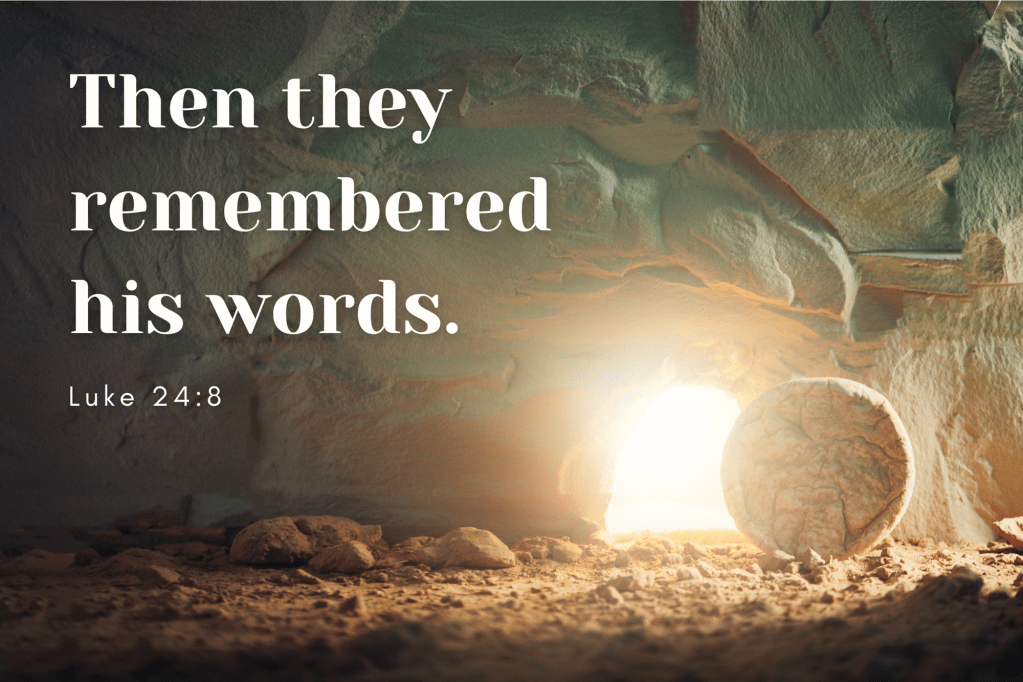
There is a basic pattern to the four resurrection narratives in the gospels (see also Mathew 28: 1-10; Mark 16:1-8; John 20:1-10). Women go to the place of Jesus’s burial doing what they must do. Life continues. Who they were varies a bit depending on the evangelist, but their reaction to the empty tomb as first witnesses of the resurrection is the same: fear and distress. It takes some celestial manifestation to intercede and help them understand what has happened. Then, they go and tell the other disciples, moving from witnessing to becoming the first announcers. Each gospel author puts a little wrinkle in the overall narrative. In Luke’s, the transformation happens when they are asked to remember.
From Acts, we learn what it means to be an announcer of the resurrection. Those transformed are to tell others of Jesus’ deeds of healing and liberation (38), about what he endured at the cross out of love for us (39), earning the right to be the judge of the living and the dead (42). Jesus is Lord, and no one else (36), and faith in him alone has the power to forgive all our sins (43).
Paul teaches the church in Corinth that when God left that tomb empty, God destroyed every ruler and authority of this world who opposes the Good News (23) and ultimately death (26) so we all can be made alive in our only Lord, Jesus Christ (22).
The psalmist sings:
“I shall not die, but I shall live,
and recount the deeds of the LORD.
This is the LORD’s doing;
it is marvelous in our eyes.
This is the day that the LORD has made;
let us rejoice and be glad in it (Psalm 118: 17, 23-24).”
 Bridging Faith