
2nd Sunday after Epiphany
Isaiah 62:1-5; Psalm 36:5-10; 1 Corinthians 12:1-11; John 2:1-11
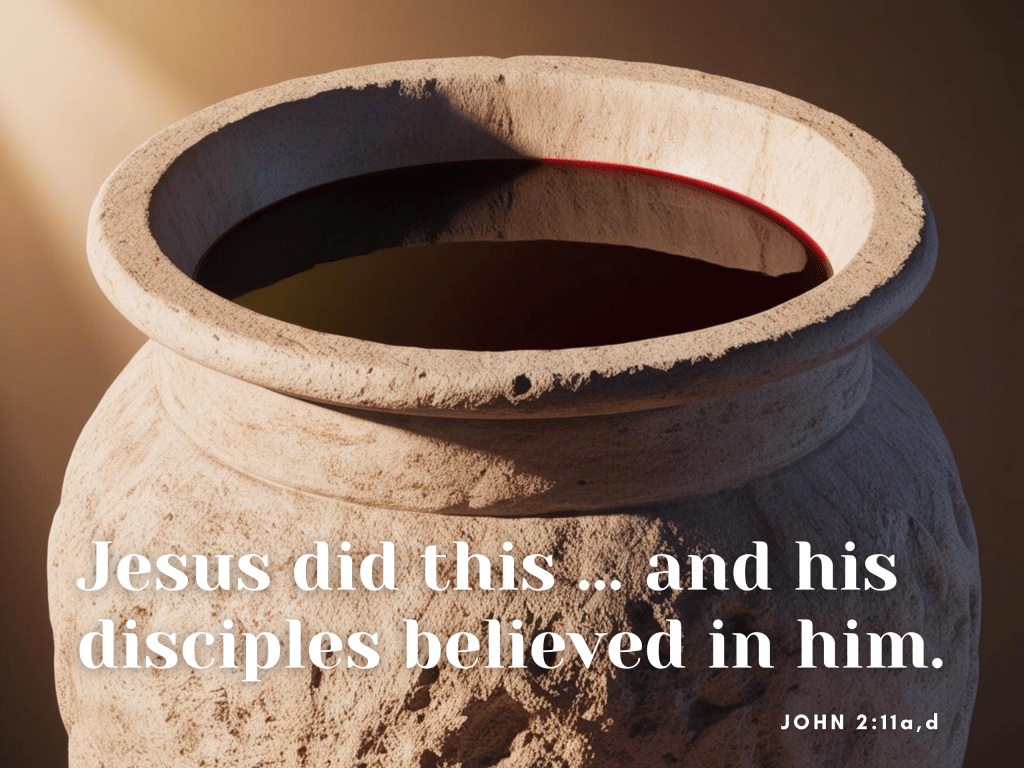
The second Sunday of Epiphany brings us the first public act of Jesus in the Gospel of John. There are more crevices and nooks to explore in the account of the Wedding at Cana than what meets the eye. For instance, Jesus was not planning to transform anything here. He is just attending the event, whatever the motivation might be. He makes that much clear to his mother, “My hour has not yet come” (verse 4). I wonder what kind of non-verbal communication happened between Mary and her son. There is no further exchange of words between them, only a command from her to the servants: “Do whatever he tells you” (5). What follows is abundance upon abundance, causing the disciples to believe (11).
Through Isaiah, God promises profound transformation and restoration for a nation that is ashamed and disgraced. Instead of being known as “Forsaken” and “desolate,” they will be known as “My Delight” (verse 4). Perhaps Mother Mary, knowing that she birthed “God with us” and that God is capable of such majestic things, does not doubt that the man in front of her can find a way to resolve the conundrum faced by party hosts and organizers.
The power to transform the solubles in those huge stone jars can only come from the Holy Spirit placed upon the Son of God. It is the same Spirit we shared with Him in baptism and the same Spirit that Paul tells the divided community in Corinth is equally manifested in all kinds of human gifts for one purpose: the common good (verse 8).
The psalmist sings:
“How precious is your steadfast love, O God!
All people may take refuge in the shadow of your wings.
They feast on the abundance of your house,
and you give them a drink from the river of your delights.
For with you is the fountain of life;
in your light we see light (Psalm 36:7-9; NRSVue).”
 Bridging Faith