
All Saints
Isaiah 25:6-9; Psalm 24; Revelation 21:1-6a; John 11:32-44
This first Sunday of November, Christians of the Lutheran perspective take another break from the Revised Common Lectionary to observe the All Saints Festival. During worship, we commemorate all who are made saints by God’s gracious gift of forgiveness and faith in Jesus Christ. Traditionally, we especially remember the saints who have gone before us and say the names of those who have died in the past year. It is a Sunday of many powerful emotions.
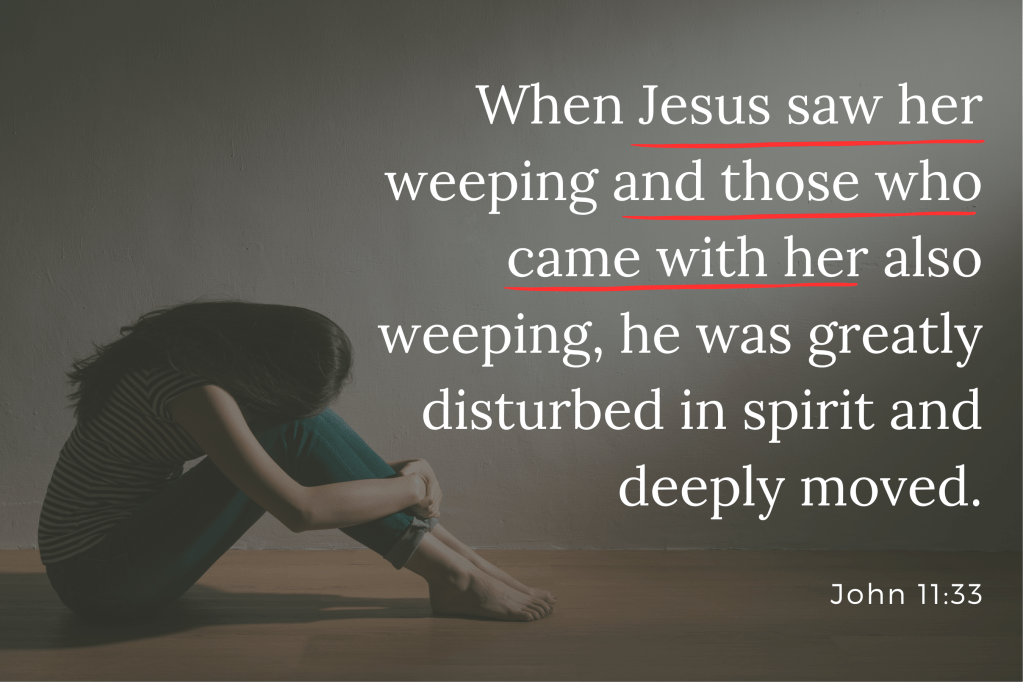
The gospel reading from the 11th chapter of John depicting the raising of Lazarus from the dead could not be more fitting. The narrative is full of those emotions. There is anxiety about what may come next (verse 7), lament over Lazarus’s perceived fate (21, 32, and 37), doubt (40), profound grief, and a desperate need for consolation (31-32). However, there is also an unshaken sense of trust in what God is doing among the people (24 and 27). Not lost in the intensity of the scenes is the fact that Jesus himself is gutturally disturbed by the deep pain he finds in Mary, Lazarus’ sister, and some of their friends (33).
God has always heard the cries and the laments of the people. So much so that through Isaiah, God makes a promise of ultimate consolation. The celebratory feast where all [peoples] are invited (25:6). There they will hunger no more, thirst no more, their disgrace and their tears wiped away and death swallowed up forever (6 and 8).
For the Christian believer, Jesus, our Lord and Savior, fulfills that promise (Revelation 21:1-6). Behold! God’s home is with all the nations (3) and with all that triumphantly come out of the great ordeal ( 7:14), for the one sitting on the throne, the Alpha and the Omega, has made everything new (5-6)!
The psalmist proclaims:
Who may ascend the mountain of the Lord,
and who may stand in God’s holy place?
Those of innocent hands and purity of heart,
who do not swear on God’s being, nor do they pledge by what is false.
They shall receive blessing from the Lord
and righteousness from the God of their salvation (Psalm 24:3-5; Evangelical Lutheran Church, ELW).
 Bridging Faith