
19th Sunday after Pentecost
Numbers 11:4-6, 10-16, 24-29; Psalm 19:7-14; James 5:13-20; Mark 9:38-50
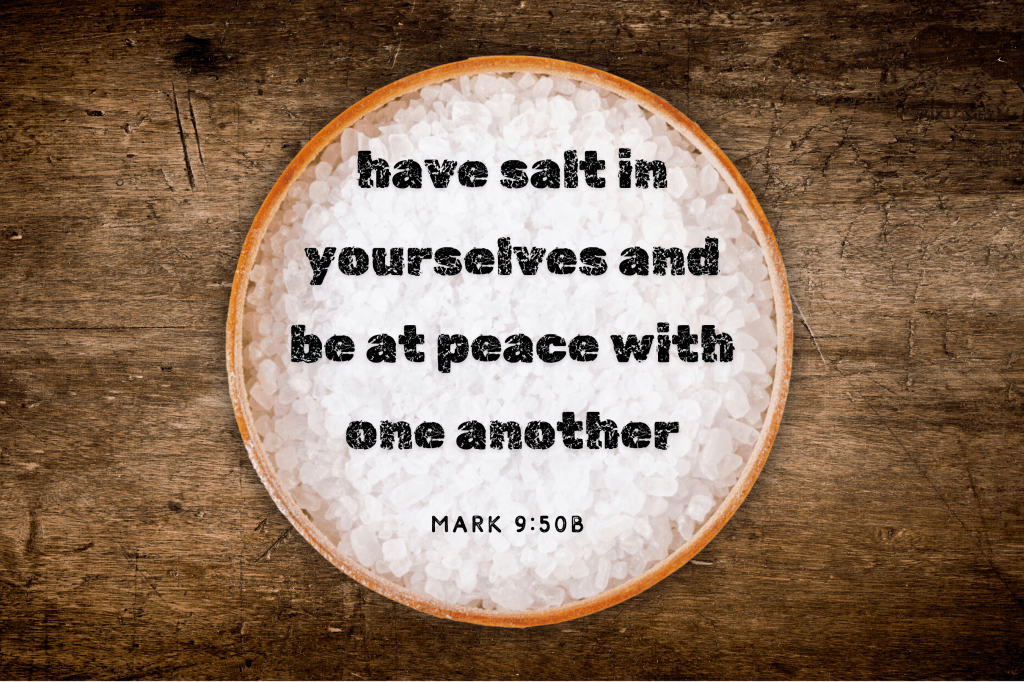
An M.D. friend once shared with me that Jesus’ short speech on the 19th Sunday after Pentecost (Mark 9:43-49) reminded him of ancient battlefield injuries and some techniques used to treat them. Salt and fire would stop the bleeding and prevent infections. They would effectively save the lives of fallen warriors. That is a very interesting reading for the gospel. Last Sunday, Jesus placed a little child on his lap (9:36) and told his disciples that whoever welcomed one such a child in his name welcomed both him and God into their lives (37). Well, as far as we know, Jesus is still holding that child, and such a child is one of the little ones who believe in him and who no one should dare cause to stumble (42). That is the statement that triggers the dismembering of the body (43-48).
What about the person spirit-healing in Jesus’ name, but outside of Jesus’ inner circle (Mark 9:38-41)? Seing outsiders with suspicion is as old as dirt. Moses had to deal with that already in Numbers when Eldad and Medad, who were not among the 70 elders invited to the tent and appointed to help Moses carry the burden of the people (11:16-17), began speaking on God’s behalf (26). Nonetheless, the Spirit rested on them, and the complaint went up the ladder to Joshua and Moses (27-28). Moses answered: the Spirit is upon them, so let them be (29). The response to those suspicions is as old as dirt, too: the Spirit does what the Spirit does.
Suppose the Spirit rests upon those proclaiming the good news of Jesus Christ, especially if it brings healing and hope to the vulnerable and distressed. In that case, an opportunity presents for them to pray on behalf of the people’s burdens. For James, the “prayer of faith” will “save the sick” (5:15), and the “prayer of the righteous” is powerful and effective (16). Hyperboles aside, prayers matter!
The Psalmist prays:
“But who can detect one’s own errors?
Clear me from hidden faults.
Keep back your servant also from the insolent;
do not let them have dominion over me.
Then I shall be blameless and innocent of great transgression.
Let the words of my mouth and the meditation of my heart be acceptable to you,
O LORD, my rock and my redeemer (Psalm 19:12-14; NRSVue).”
 Bridging Faith