5th Sunday after Pentecost
Job 38:1-11; Psalm 107:1-3, 23-32; 2 Corinthians 6:1-13; Mark 4:35-41
Mark 4:35-41
35 When evening had come, [Jesus said to the disciples,] “Let us go across to the other side.” 36 And leaving the crowd behind, they took him with them in the boat, just as he was. Other boats were with him. 37 A great windstorm arose, and the waves beat into the boat, so that the boat was already being swamped. 38 But Jesus was in the stern, asleep on the cushion; and they woke him up and said to him, “Teacher, do you not care that we are perishing?” 39 Jesus woke up and rebuked the wind, and said to the sea, “Peace! Be still!” Then the wind ceased, and there was a dead calm. 40 He said to them, “Why are you afraid? Have you still no faith?” 41 And they were filled with great awe and said to one another, “Who then is this, that even the wind and the sea obey him?”
. . .
The Scary Place Between Death and Christ
Grace to you, beloved of God, and peace from our Lord and Savior Jesus Christ.
The year was 2007 and their previous season had been great. Carried by a stout defense and a sensation rookie kickoff and punt returner named Devin Hester, the Chicago Bears had made it to the Super Bowl.
For young quarterback Rex Grossman, however, the previous two years had been a whirlpool of ups and downs. In each of the previous two seasons, Grossman suffered injuries that kept him out of the field for significant amounts of time. In the 2006 season, he returned to action in time for the playoffs to roars at Soldier Filed and the excitement of the whole the Bear Nation. Unfortunately, we faced Payton Manning in the Super Bowl, and he proved to be too much for us, even with Hester scoring a touchdown on the opening kickoff return.
The 2007 season was not so great, though. There were locker room issues. There was the so-called Super Bowl hangover, and Grossman was in a slump, typical of young quarterbacks, once the defenses had him figured out. Opponents began taunting him for lacking the proper mental strength, which seemed to get under his skin, and the word “bust” began to go around the sports media circles. It was then that I read a quote from Grossman in the paper saying, “I can only control what I can control,” referring to his efforts to navigate through the perfect storm battering against him at that point of his career. It was the first time I heard the expression, and I have come to appreciate the wisdom of those words over the years.
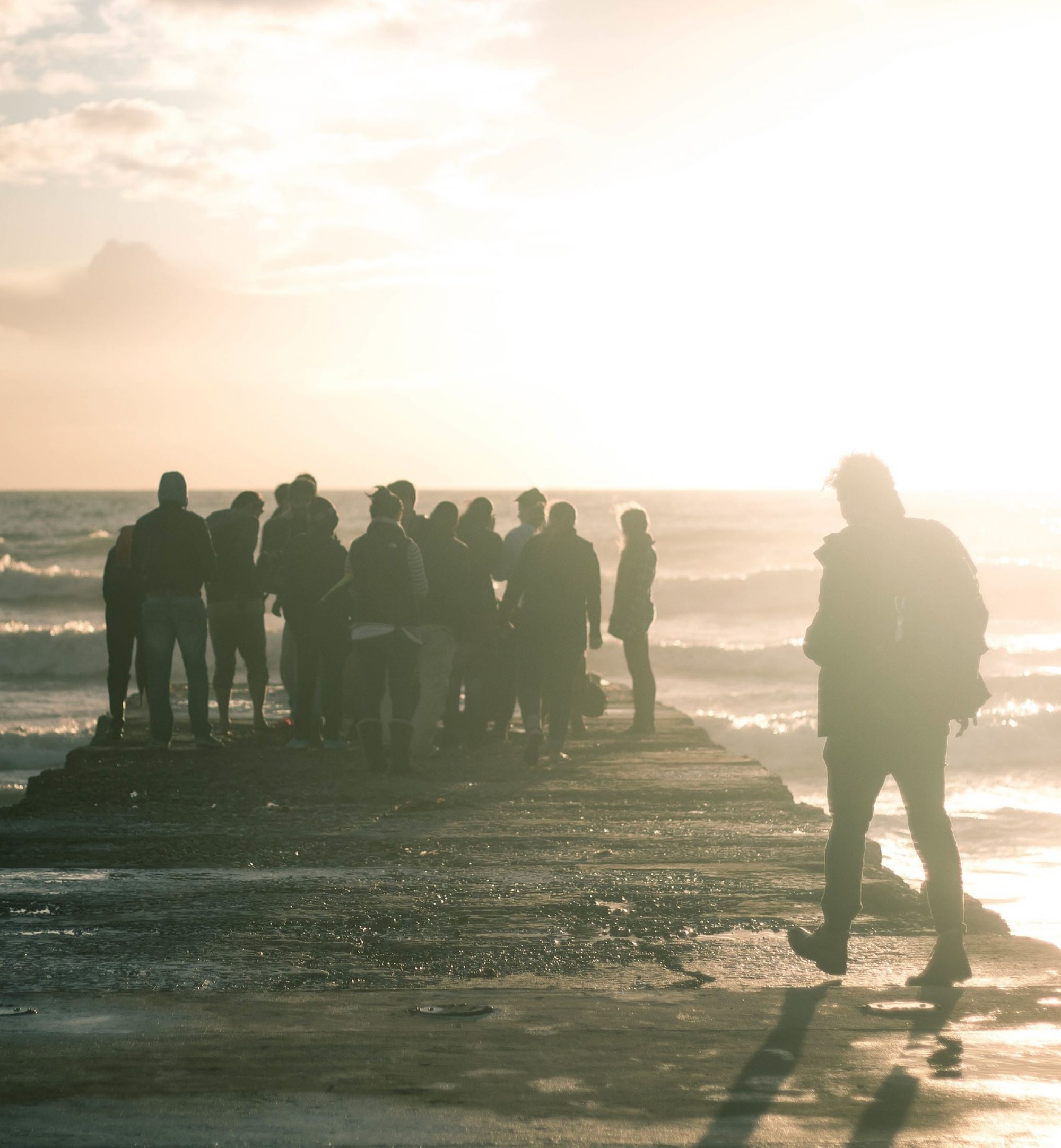
When it comes to storms at sea – or any major body of water for that matter – sailors will tell you that all you can do, unless you have a ship big enough to push through the waves, is to ensure that the vessel remains afloat. However, depending on the storm or the boat, one may be absolutely unable to control that either. The wind will blow as it chooses, making the waves it creates unpredictable. Those who have been passengers to raging waters will say those were some of the most terrifying situations they have ever experienced. One is powerless over it and can only desperately hope for it to stop.
No wonder the authors of the biblical texts were inspired to use the images of storms in the deep sea to illustrate not only our fear and despair in dreadful and hopeless situations but also the desire of our God to interfere in those situations on our behalf, given we trust in what God is doing. The problem is that what God might be doing is often confounding and disorienting to us, even terrifying. That is the nature of storms, and not at all a good place to be.
We visited with friends yesterday, and I threw an instant poll at everyone. How much did they feel God was behind the dreadful situations we face periodically on this earth? The consensus was not at all. God is good all the time, they said. Good, I thought, they took their Sunday School lessons to heart. However, they continued, we are mostly – not always, but mostly – responsible for the suffering we inflict or neglect to alleviate in the world. That was a very insightful answer. Yet, and I don’t know about you, the part that says that we are “not always” responsible for the world’s predicaments is what gets to me sometimes, and I am not sure someone has a good answer for that, except the one who spoke everything into existence. I intend to ask when we see each other at the celebration by the Throne of the Lamb.
Until then, here is a case in point for today: Jesus, the disciples, the storm, and the boat.
I wonder what got in the Son of God to suddenly get his disciples to cross the northern Lake Tiberias, a.k.a. see of Galilee, to the other side after dark. We will hear later that Jesus had some business to tend to in the land of the Gesarenes, located on the other side of the lake. Still, why set sail after sunset, as they were, without preparation? The next morning would be just fine. I don’t know if that oddity caused the disciples to scratch their heads. I scratched mine.
True, the Sea of Galilee is dead calm most of the time. Unless the climate has changed drastically in Israel since then, storms big enough to cause experienced boatmen to freak out and worry for their lives are rare. To give us an idea, the last time it happened in recent history was in 1992. Then, in the last century, only a couple more times before that. This may explain the disciples playing no contest to Jesus’ course of action – unlikely other situations in the gospel of Mark when they argue with the Messiah in quite strong ways. They would certainly have the moon and the stars to assist with navigation and get to the other side, so off they went. Jesus wanted, Jesus got it.
But then this possibly rare and strong storm hits, catching everyone by surprise. Like most places on this earth, storms in the Sea of Galilee come with heavy and dark clouds. Therefore, at night, the moon and the stars would not have been visible, they would lose their light, and they would not know where to go. The situation could very well be dire enough for them to be fearful for their lives, and they certainly had no responsibility or control over it. To make matters worse, Jesus was asleep in the stern. But he answers the disciples’ cries, commands the storm to cease, and provides them with a teaching moment, so to speak. “Why are you afraid? Have you still no faith?” After what you have witnessed, have you still no trust in me?
In most contexts, trust is a synonym for faith or belief. We could either say that we trust or have faith in God’s promises, or we can say that we fully trust or believe that nothing can separate us from the love of God in Christ Jesus. Nonetheless, despite our confession that we received the necessary faith in Jesus Christ as this precious and gracious gift, how often do we put more trust in our Lord and Savior than ourselves when we face the adversity brought in by the storms of life, either as individuals or faith communities?
Maybe our faith is not there yet. Maybe we need more of that daily practice of baptism. Maybe we could use more repentance – a change of mind and heart – and forgiveness. Perhaps it is that old self who dies a hard death thing.
In the meantime, we can be sure of the precious cargo in jars of clay sitting in the bow of our ship. Jars who have endured “afflictions, hardships, calamities, beatings, imprisonments, riots, labors, sleepless nights, and hunger.” Jars that have been crushed and yet never destroyed. Jars who have survived the rage of many seas. Jars that carry the mark of the cross on their body. Jars that are sustained and protected by the righteousness that belongs only to God and by the love of Jesus.
Beloved, as jars of clay made by the divine potter, we are the body of Christ, born in a manger in the middle of the night and hung on a tree, who was risen and left the tomb empty. With him, no storm can get to us. The one who speaks peace into existence has seen us to the other side many times before, and he will do it all over again. Trust in him. Thanks be to God. Amen.
 Bridging Faith