
5th Sunday of Easter
Acts 8:26-40; Psalm 22:25-31; 1 John 4:7-21; John 15:1-8
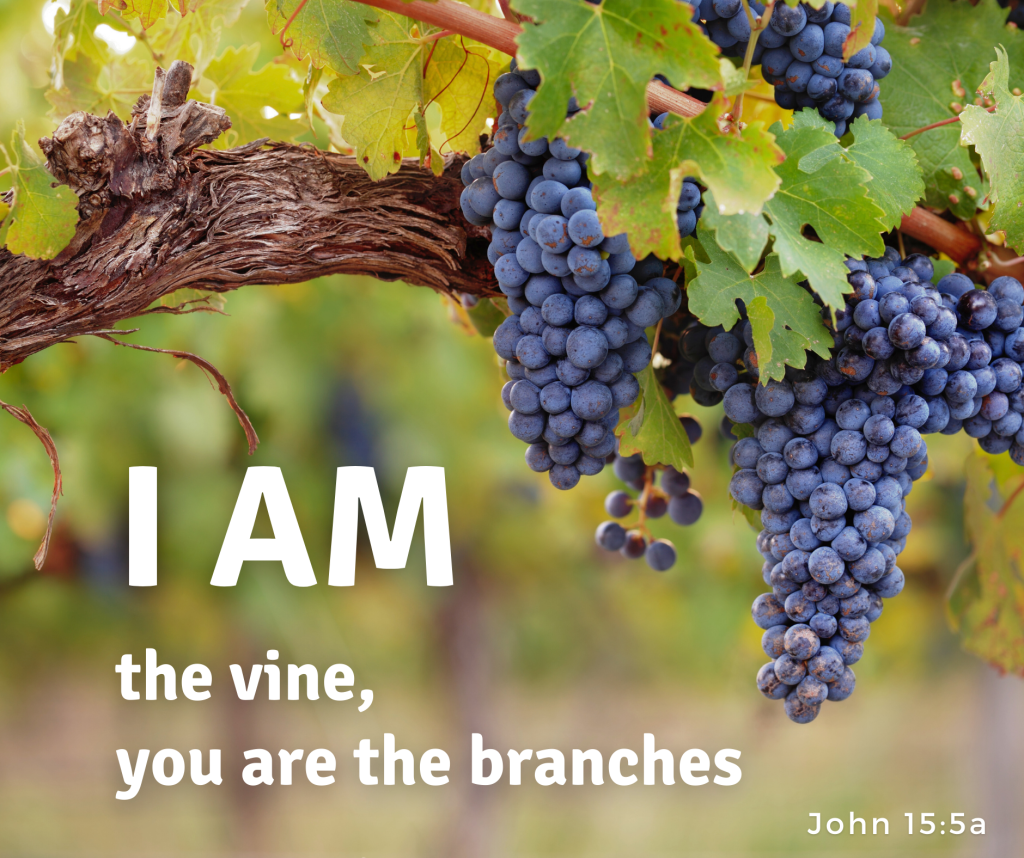
The 5th Sunday of the Resurrection brings another agricultural image—this time with undertones of plant physiology—about the presence of God incarnate in the human form of Jesus from Nazareth (I AM, see https://wp.me/p9drFo-tN). The setting differs from the Good Shepherd discourse in the 10th Chapter of John. Jesus, the True Vine, is part of a larger segment of John’s gospel that begins in chapter 13 with the foot-washing and the mandate for the disciples to witness his love, known as the farewell discourse. Its location in John’s larger narrative adds layers of comfort and hope, for Jesus is preparing his disciples for the challenges ahead with many loving and assuring words.
This divine love is repeated in twelve out of fifteen verses in 1 John, chapter 4. That is a lot of love. “God is love, and those who abide in love abide in God, and God abides in them (16). … There is no fear in love, but perfect love casts out fear; for fear has to do with punishment, and whoever fears has not reached perfection in love (18). … The commandment we have from him is this: those who love God must love their brothers and sisters also (21).”
And the love is extended to the eunuch from Ethiopia, who, despite his royal position in a different culture (Acts 8:27), would be bound to marginalization in Jewish and Greco-Roman circles due to his emasculate status. The loving Spirit knows no fences, and to this already claimed and beloved child of God, Phillip is sent (26) to extend the gift of baptism. The eunuch from Ethiopia belongs to Jesus’ flock.
The psalmist proclaims:
“From you comes my praise in the great congregation;
my vows I will pay before those who fear him.
The poor shall eat and be satisfied;
those who seek him shall praise the Lord.
May your hearts live forever!
All the ends of the earth shall remember
and turn to the Lord,
and all the families of the nations
shall worship before him.”
(Psalm 22:25–27, NRSVue).
 Bridging Faith