
21st Sunday after Pentecost
Isaiah 45:1-7; Psalm 96:1-13; 1 Th. 1:1-10; Matthew 22:15-22
There is way more than what meets the eye when Jesus’ is approached by Pharisees and Herodians from Jerusalem who wish to entrap him (Matthew 22:15). Overall, the situation is very tense. It all began in the early verses of chapter 21 with the spectacle in the temple after Jesus arrived triumphantly in the city. Jesus then followed with the parables that illustrate the rejection of the Kingdom of God – the two sons, the wicked tenants, and the wedding banquet – which the religious leaders who questioned his authority (21:23-27) took personally and plotted to kill him. The backdrop is the preparations for the Passover when pilgrims significantly increased the city population. This bulging of Jerusalem’s populace strained the Roman occupiers, raising their level of concern with a possible revolt fueled by the extreme dissatisfaction of the Judeans with the various taxes imposed on them. The wrong word or attitude could ignite this powder keg and send the perpetrator to the burning pile outside the city.
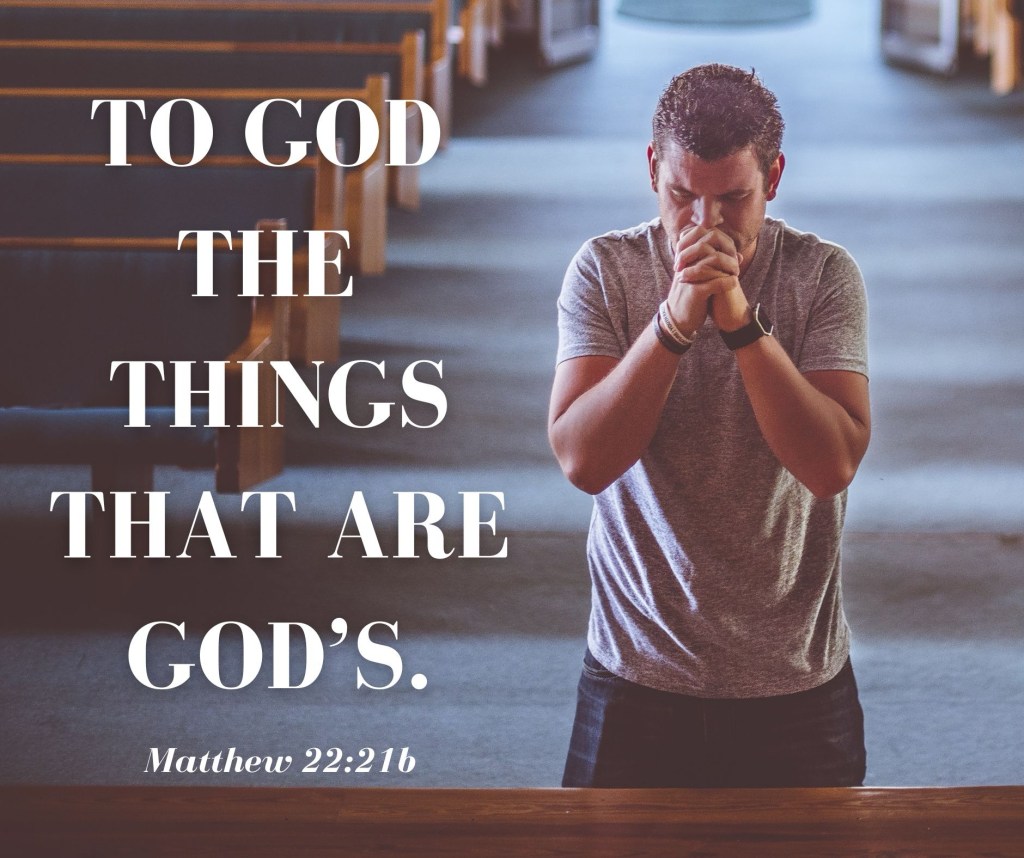
So here comes the first attempt by the religious authorities to get Jesus to say something that would put him to death. We don’t know for sure, but they might have brought the Herodians with them because they would be loyal to Caesar. If Jesus said anything against the emperor, they would likely denounce it to the Romans. On the other hand, if Jesus noticed their presence and backed down by saying it was absolutely OK to pay all those heavy taxes to Caesar, he would find very angry ears in the form of the fierce opposers to the Roman occupation, especially their more radical and armed branch, the “Zealots.” The trap is very well set, and the Savior of the World seems doomed. Nonetheless, he baffles everyone who hears his words then and now, “Give therefore to the emperor the things that are the emperor’s, and to God the things that are God’s (22:21).”
Paul lifts the church in Thessalonica that gave to God the things that are God’s by turning from idols and serving a living and true God (1 Thessalonians 1:9) through faith, love, and steadfastness of hope in Christ (3). God reminds us through the words of Isaiah that he is the creator, provider, protector, and preserver of everything that is, even for those who do not know God.
The psalmist writes in divine poetry:
“Sing to the Lord a new song;
sing to the Lord, all the earth.
Sing to the Lord, bless the name of the Lord;
proclaim God’s salvation from day to day.
As for all the gods of the nations, they are but idols;
but you, O Lord, have made the heavens.
Majesty and magnificence are in your presence;
power and splendor are in your sanctuary (Psalm 96:1-2, 5-6).”
 Bridging Faith