St. John’s Lutheran Church, Toluca, IL – 3rd Sunday after Epiphany
Isaiah 9:1-4; Psalm 27:1, 4-9; 1 Corinthians 1:10-18; Matthew 4:12-23
Gospel: Matthew 4:12-23
12Now when Jesus heard that John had been arrested, he withdrew to Galilee. 13He left Nazareth and made his home in Capernaum by the sea, in the territory of Zebulun and Naphtali, 14so that what had been spoken through the prophet Isaiah might be fulfilled:
15“Land of Zebulun, land of Naphtali,
on the road by the sea, across the Jordan, Galilee of the Gentiles—
16the people who sat in darkness
have seen a great light,
and for those who sat in the region and shadow of death
light has dawned.”
17From that time Jesus began to proclaim, “Repent, for the kingdom of heaven has come near.”
18As he walked by the Sea of Galilee, he saw two brothers, Simon, who is called Peter, and Andrew his brother, casting a net into the sea—for they were fishermen. 19And he said to them, “Follow me, and I will make you fish for people.” 20Immediately they left their nets and followed him. 21As he went from there, he saw two other brothers, James son of Zebedee and his brother John, in the boat with their father Zebedee, mending their nets, and he called them. 22Immediately they left the boat and their father, and followed him.
23Jesus went throughout Galilee, teaching in their synagogues and proclaiming the good news of the kingdom and curing every disease and every sickness among the people.
NRSV
…
The Imperfect Path to Illumination
Grace to you, beloved of God, and peace from our Lord and Savior, Jesus Christ.
Have you sat in deep, deep sensory darkness? I am not talking about the semi-darkness of a home when you turn the lights off, and the glowing of the equipment’s little lights and the light from the street provide enough sight until the eyes adjust. I mean the total absence of light. And not only the total absence of light but also when the surroundings do not feel safe.
The first time for me was terrifying. I was 7 years old.
My parents had sent me to camp, the reasons worthy of a whole sermon. Anyway, without digressing, the counselors decided to run a treasure hunt in the middle of the night. The campgrounds were quite wooded and isolated, so there were no city lights of any sort. Don’t get me wrong, that was fun until – I didn’t seem to recollect why – we had to sit down, turn off any lantern and flashlight and wait in silence for another team to find us. I remember a countdown, probably to get us ready, then 3, 2, 1, lights off. Complete and sustained absence of light. There was probably a full moon with cloudy skies because I remember not being able to see my hands. Because of my deep introversion, I was always the quiet kid mulling things over by myself. Therefore, I had no one within my reach. It was one of the most dreadful moments I have ever experienced. It took me a long time, up to my teens, to become somewhat comfortable with darkness again.
I had other encounters with the complete absence of physical light, but this is the one that always comes to mind when a place of deep darkness is mentioned in the bible.
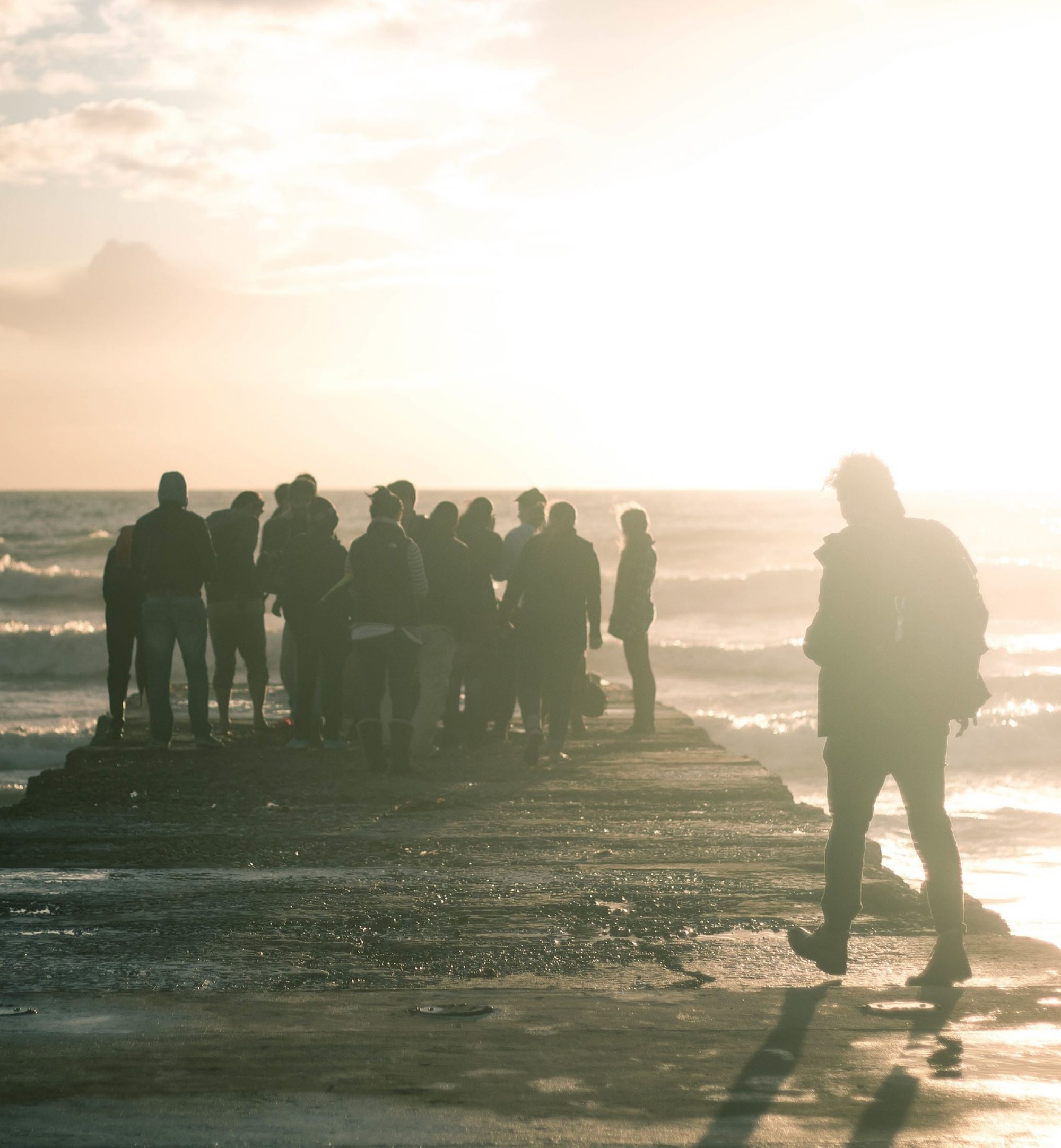
We can be sure the ancient Israelites were no strangers to the absence of light. Today the places we live generate enough light to be seen from space. My phone can illuminate my path wherever I go. I suspect that was not the reality of the people in the ancient near east by the Mediterranean Sea. Once the sun set in the deep west, I suspect the darkness that amplified the dangers of the wilderness was not difficult to find. It is not difficult to imagine why our northeast African and Middle Eastern faith ancestors would associate God’s saving presence amid dreadful and hopeless situations with flames of light shining in deep darkness. Human beings of all nations and places have always relied on fire and light for comfort, protection from danger, and healing.
In particular, the people of Galilee in the northern part of Palestine had their share of real-life dread and hopeless situations by Jesus’ time. It began with Solomon, many centuries before, who ruled the whole Kingdom of Israel from Jerusalem in the south. According to the book of Kings, Solomon imposed forced labor in the territory of the Northern Tribes, which included Zebulun and Naphtali. Upon his death, the northern tribes pleaded with Solomon’s son, Rehoboam, for the practice to end. He instead made the yolk on them harder and more oppressive. The Northern Tribes revolted, and the Israelites were divided between the Southern Kingdom of Judah and the Northern Kingdom of Israel. The breaking of the covenant became official.
The Northern Kingdom had its ups and downs. Periods of prosperity when the covenant was broken some more when the poor, the widow, and the orphan were neglected. They also began to worship the gods of their neighbors, which was a big no, no. They walked away from God, distrusted God’s promises, then later would return.
Things got hairy when the mighty Kingdom of Assyria knocked at the door, and their military incursions and territory occupation became frequent. War brings famine, disease, gloom, and thick darkness. Eventually, the Northern Kingdom made a military alliance with their gentile neighbors to fight the Assyrians off. However, such an alliance was perceived as threatening the Southern Kingdom of Judah. Consequently, they distanced themselves some more. The Northern Kingdom of Israel, the land of Zebulun and Naphtali, Galilee of the gentiles, became a vassal state. When the Babylonians later overcame the Assyrians, they marched toward Judah and Jerusalem. Now is the Southern Kingdom’s time to face dread and hopelessness. The first temple would be destroyed, and the promised land would be all lost. All that is left to the prophet is to voice another promise from God. The people who walked in darkness have seen a great light. A child will be born.
It is not by coincidence that the child begins his ministry of healing and restoration in the land where everything was lost after all the promises were broken by us, mere mortals. Really broken, to the point that nothing good can come from Nazareth, in Galilee, the territory of Zebulun, and Naphtali. He is the Savior to teach us again to be a light for one another and to live in peace. God’s promise of a child needed to be fulfilled, and his ministry began exactly where things were broken the most. There began the final chapter of God’s salvation, from Israel to the world.
What that has to do with fishing for people?
See, the reason God still wants us to read and listen to the Word is because the whole history of God’s salvation for all the Saints of every time and place can sometimes be contained in our personal journeys, both as individuals and as the church. There is no single and no perfect path to illumination, restoration, and peace. We stick to what we know, to the realities in front of us. We keep our jobs, pay bills, and save for retirement. We often do what is deemed necessary to protect and provide for the ones we. Therefore, we fish for fish.
I can tell you I did not sit alone for long in the dark woods. Someone reached for me. It was nice to feel not alone. We then could see the lights coming near. We were found by the other group. From there, we found another group sitting in darkness. Together we follow the clues to solve the plot the counselors created and made to the bright shining light of the camp house. I suppose that is what being transformed into a light to others and going fish for people looks like. May the light of Christ be with us always. Thanks be to God. Amen.
 Bridging Faith