
16th Sunday after Pentecost
Amos 6:1a, 4-7; Psalm 146; 1 Timothy 6:6-19; Luke 16:19-31.
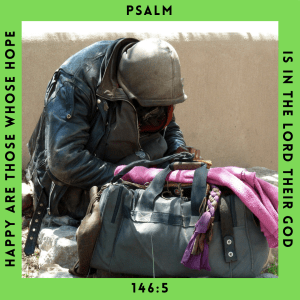
Perhaps the gospel text for this Sunday should start with verses 14 and 15 of the 16th Chapter of Luke. It reveals to us who Jesus is talking to when he tells the parable of Lazarus and the rich man. Here Jesus addresses the Pharisees, who are lovers of money (Luke 16:14). We don’t know whether these are the same Pharisees who are seeking positions of honor and not being mindful of the lame, the poor, and the blind back in Chapter 14 (verses 8-14). Nonetheless, they could very well be.
In the parable about the Jewish view of the afterlife, the poor beggar has a name, Lazarus. His opposing character does not. He is just another rich man, and the fact that he is not named does not exactly place him in an honorable position. On the other hand, Lazarus is granted honor by being in the company of the father of faith. He had done nothing to deserve it but to have lived a miserable life in this world. The rich man is in agony despite his status during his earthly life. He certainly missed plenty of opportunities to do what it is instructed by the Torah and the word of God through the prophets (Luke 16:29), and apparently, so did the rest of the household he came from.
The post-resurrection Christian new covenant would provide hope that the rich man could be saved. However, he does seem to be able to come up with what is necessary to inherit the promise of everlasting life. Therefore, the afterlife chasm between his suffering and Lazarus’ comfort remains.
The prophet Amos warns about the fortune of those who find themselves too comfortable in their lives. The psalmist sings, “Happy are those whose hope is in the Lord their God, who executes justice for the oppressed;
who gives food to the hungry (Psalm 146: 5b, 7).” In his letter to Timothy, Paul calls Christians to “fight the good fight of the faith” and to “take hold of the eternal life, to which [we] were called and for which [we] made the good confession in the presence of many witnesses.”
Image by Brigitte Werner from Pixabay
 Bridging Faith